
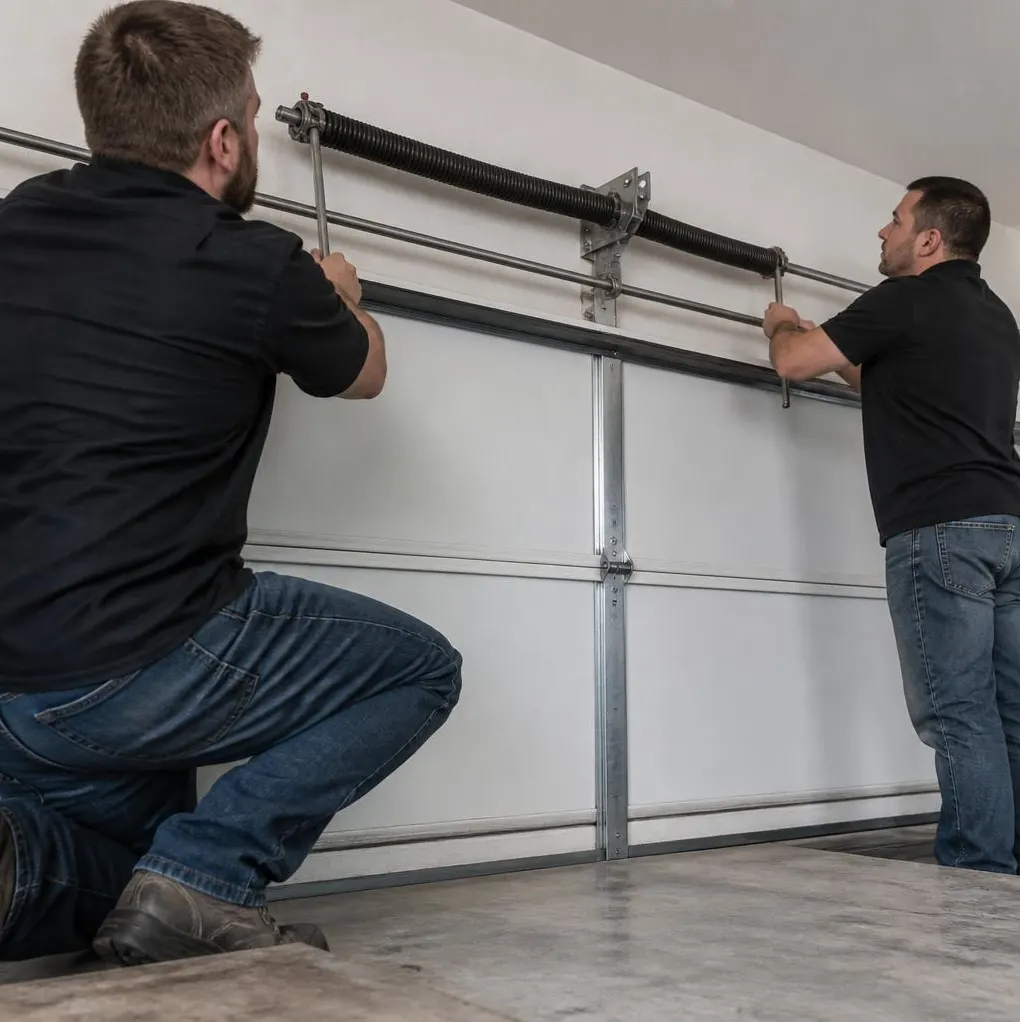
What a Technician Hears on a Noisy-Opener Call
Most service calls about a loud opener in this part of Highlands County follow a pattern. The homeowner says the door has gotten noticeably louder over the past few months, usually after a stretch of humid weather or right after hurricane season winds rattled the house. On inspection, it's rarely the opener motor itself that's failed. More often it's rusted hardware from moisture in the air, a swollen wood door panel rubbing against the track, loose bolts that worked free from vibration, or dry rollers grinding metal on metal. The chain-drive opener gets blamed because it's the loudest part, but the real noise is usually coming from everything connected to it.
Tools You'll Need
- Socket wrench set or adjustable wrench
- Step ladder
- White lithium grease or silicone-based garage door lubricant (not WD-40 or motor oil, which attract dust)
- Clean rags
- Flashlight
- Replacement nylon rollers (if needed)
- Rubber isolator kit for the motor mount (optional)
Step-by-Step: What a Homeowner Can Safely Do
- Tighten every bolt and screw you can reach. Start at the top of the track and work down, including the hinges, the opener's mounting bracket, and the bracket that holds the rail to the ceiling. Afternoon storms and daily temperature swings loosen hardware faster here than in drier climates, so this step alone fixes a surprising number of rattles.
- Lubricate the moving parts. Apply lubricant to the hinges, rollers (if they're metal), the torsion spring, and the chain or belt. Wipe off excess so it doesn't collect grit. Skip the track itself; lubricating the track can actually cause rollers to slip.
- Inspect the rollers. Shine a flashlight on each roller as someone opens the door slowly, or do it yourself in short bursts. Look for cracked nylon, flat spots, or rust bleeding from the bearings. Salt-laden air near the coast and general Florida humidity speed up corrosion on metal rollers, so if you see rust streaks, that's your noise source.
- Swap worn rollers yourself if they're nylon with sealed bearings. These are a straightforward DIY replacement: remove the roller bracket, slide the old roller out, slide the new one in, and reattach. Plan on replacing them in sets rather than one at a time.
- Add rubber isolators between the opener motor and the ceiling bracket. Vibration from the motor transmits straight into the ceiling joists and amplifies the sound through the whole garage. A simple isolator kit, installed with the hardware you already removed in step 1, cuts a lot of that resonance.
- Check the door panels for swelling or warping. If you have a wood or wood-composite door, moisture absorption during the rainy season can cause a panel to bind against the track, creating a scraping sound on every cycle. Note where it's rubbing; this is useful information even if the fix itself needs a technician.
Where DIY Should Stop
A few symptoms point to something beyond a lubrication-and-tightening job, and trying to push through them yourself risks injury or a bigger repair bill:
- Grinding or popping from the spring area. Torsion and extension springs are under extreme tension. A spring that's starting to fail will often get loud right before it breaks, and a broken spring can cause the door to slam down.
- A door that's visibly off-track or sitting crooked. If one side of the door looks lower than the other, or the rollers have jumped the track, don't force the opener to keep running the cycle.
- Cables that look frayed or a roller that's worn through its bracket. These parts work under load, and a snapped cable can let a heavy door drop suddenly.
- An opener that's still noisy after hardware, lubrication, and roller fixes. At that point the chain-drive mechanism itself, or the gear inside the motor housing, is usually the culprit, and that's an opener-level repair or replacement.
Chain-Drive vs. Belt-Drive: Is a Swap Worth It?
If your opener is old enough that the chain has stretched and developed slack, no amount of lubrication will fully quiet it. A belt-drive opener uses a reinforced rubber belt instead of a metal chain, which eliminates most of the mechanical clatter. It's a reasonable upgrade if you're already due for a new opener, want a quieter garage near a bedroom or home office, or your current unit isn't rated for Florida's wind-load requirements on newer doors. The trade-off is upfront cost versus a chain-drive replacement, but the noise difference is noticeable from the first cycle.
When to Call Lake Placid Garage Door
If you've tightened hardware, lubricated the moving parts, and the door is still noisy, or if you've found a cracked spring, frayed cable, or a door that's come off its track, it's time to call in a technician rather than keep troubleshooting. Our team handles Garage Door Opener Installation for homeowners ready to move to a belt-drive system, and we handle Garage Door Cable & Roller Replacement and Off Track Door Repair when the noise traces back to worn hardware rather than the opener itself. We'll check the whole system together, since a noisy opener is often one symptom of a bigger wear pattern caused by this area's heat, humidity, and storm cycles.
If your garage door in Lake Placid, Sebring, Avon Park, or anywhere nearby has gotten louder than it should be, call Lake Placid Garage Door and we'll come take a listen.