
You Notice It While Digging Out the Holiday Bins
You're in the garage hunting for the string lights, and you hit the opener button. The door groans halfway up, hesitates, then lurches the rest of the way. Or maybe it opens fine but makes a new grinding sound it didn't have back in July. Either way, you stand there for a second thinking: that's new.
It's not your imagination. Garage doors in Highlands County take a real beating between June and October — afternoon downpours, humidity swings, the occasional tropical system pushing wind loads against the panels. By November, a lot of that wear finally shows up as noise, stiffness, or a door that just doesn't move the way it used to.
Why November Is the Right Time to Deal With It
This is the stretch between storm season and the next round of summer humidity, which makes it the best window of the year to get ahead of problems. The air is drier, nights are cooler, and if a storm did shift your door's alignment or soak into the hardware, you'll actually be able to feel and hear the difference instead of it being masked by swollen wood or dripping humidity. Cooler overnight temps also mean metal springs and tracks contract slightly — small gaps and loose hardware that were hard to notice in August tend to announce themselves now with a rattle or a hitch.
The Walk-Around: What to Actually Check
Rust and Corrosion on Hardware
Run a hand along the track brackets, hinges, and the bottom corner brackets where water tends to pool after a storm. Look for:
- Orange or reddish-brown spotting on bolts, hinges, or the track itself
- Flaking paint on steel panels near the bottom, where splash-back from downpours collects
- A rough, gritty feel on rollers instead of a smooth metal surface
If you catch surface rust early, a wire brush and a light coat of rust-inhibiting spray can buy you time. Once rust has pitted the metal or reached the spring coils, that's a part that needs replacing, not touching up.
Spring Tension and Balance
Disconnect the opener (pull the release cord) and lift the door halfway by hand. It should stay roughly in place on its own. If it drops like dead weight or shoots upward, the springs have lost tension — often from months of heat cycling followed by sudden cooler nights. Don't try to adjust torsion springs yourself; they're under heavy load and not a DIY repair.
Track Alignment
Stand back and sight down each track from the bottom. Storm wind load, even from a near-miss system, can nudge brackets just enough to throw a track slightly out of parallel. Signs to watch for: the door binding at one specific spot every time, or a visible gap between a roller and the track wall. A door that's a little out of alignment now will wear its rollers and cables faster all winter.
Rollers and Cables
Nylon rollers can crack after a summer of expansion and contraction; steel rollers can develop flat spots. Cables fraying near the bottom bracket are a safety issue, not a cosmetic one — a cable under tension that snaps can whip and cause real injury. If you see individual wire strands sticking out from a cable, stop using the door until it's replaced.
Lubrication, Done Right
Humidity leaves a sticky residue on hinges and rollers that attracts grit. Before cooler, drier weather sets in, wipe down the tracks and hardware, then apply a silicone-based garage door lubricant (not household oil, which attracts more dust) to hinges, rollers, and the top of the springs. Skip the track itself — lubricating the track surface actually makes rollers slip rather than roll smoothly.
Opener Sensors and Auto-Reverse
Afternoon downpours and blowing debris during storm season can knock the safety sensors near the bottom of the tracks out of alignment. Test them by placing a 2x4 flat on the ground in the door's path and closing it — the door should reverse immediately on contact. If it doesn't reverse, or if the sensor lights are flickering instead of solid, that needs attention before you rely on the opener through winter.
When to Call Lake Placid Garage Door
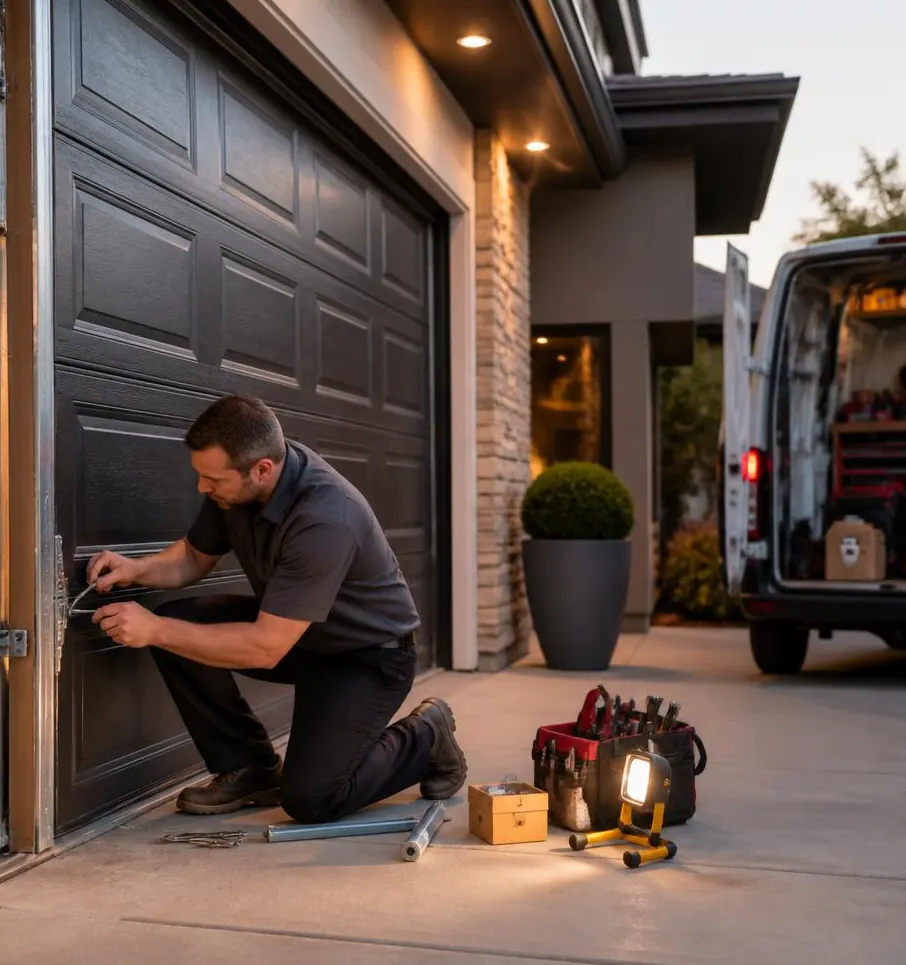
If your walk-around turns up a door that won't hold its position when lifted by hand, a cable with visible fraying, or a track that's visibly bent or out of alignment, that's the point to call in a technician rather than keep testing it yourself. Our team handles Garage Door Spring Repair and Garage Door Cable & Roller Replacement regularly this time of year, precisely because storm season leaves this kind of wear behind. We'll check tension, inspect for hidden rust at the bracket connections, realign tracks, and make sure your opener's safety sensors are reading correctly before the next round of weather rolls through.
If it's been a while since your door had a full once-over, our Garage Door Maintenance & Tune-Up service covers all of the checks above in one visit, which is often the simpler route if you'd rather not crawl around the garage with a flashlight yourself.
Ready to get your door squared away before winter settles in? Call Lake Placid Garage Door today to schedule a tune-up or repair anywhere in Lake Placid, FL and the surrounding Highlands County area.